
NVIDIA Denies RTX 5090 Discontinuation Reports — RTX 5090 Will Continue Shipping Despite Global Shortages
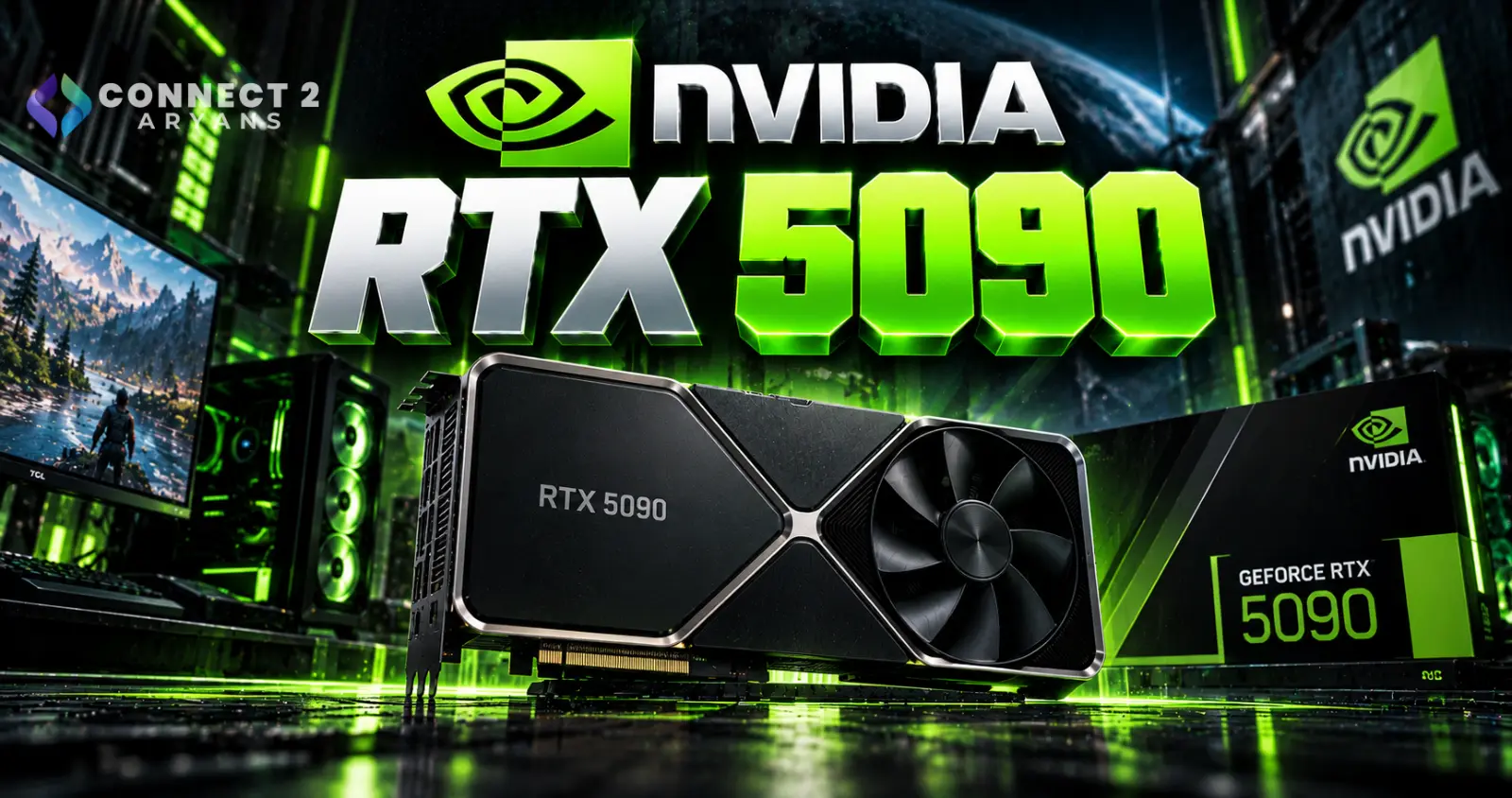
NVIDIA Denies RTX 5090 Discontinuation Reports — RTX 5090 Will Continue Shipping Despite Global Shortages
The GeForce RTX 5090 is not officially dead.
After days of reports suggesting NVIDIA had stopped production of its flagship gaming graphics card, a senior NVIDIA executive has now directly rejected the discontinuation claims.
During an RTX Spark event in Taiwan, Jeff Fisher, NVIDIA's Senior Vice President of Personal Computing, was asked about reports that the GeForce RTX 5090 was being discontinued.
Fisher said the reports were not true and indicated that NVIDIA would continue supplying the flagship GPU.
That is an important development because the RTX 5090 has recently become increasingly difficult to find through normal retail channels in several markets.
Reports had claimed NVIDIA was no longer allocating its massive GB202 GPU to consumer RTX 5090 graphics cards and would instead prioritize more profitable professional and AI products.
Retail activity appeared to add credibility to those rumors.
Some RTX 5090 listings disappeared or changed status, while availability remained extremely limited.
NVIDIA's latest response now provides something that had been missing from the discussion:
A direct statement from a senior NVIDIA executive.
But that doesn't mean all questions surrounding RTX 5090 supply have suddenly disappeared.
The important distinction is between discontinuation and availability.
NVIDIA says the RTX 5090 will continue shipping.
That does not necessarily mean RTX 5090 cards will suddenly become easy to find, return to launch pricing or become widely available across every region.
For Pakistani gamers comparing current GPUs, the broader Connect2Aryans graphics card selection includes NVIDIA, AMD and Intel options across multiple performance levels.
What Did NVIDIA Say About the RTX 5090?
The clarification came from NVIDIA Senior Vice President of Personal Computing Jeff Fisher during an RTX Spark launch event in Taiwan.
When asked about reports that the RTX 5090 had been discontinued, Fisher rejected the claim.
According to reporting from Taiwan's Central News Agency, Fisher described the RTX 5090 as an important NVIDIA product and indicated that the company would continue supplying it.
That directly contradicts reports from earlier in October claiming NVIDIA had effectively ended consumer RTX 5090 production.
NVIDIA's Position Now
The key points are:
RTX 5090 has not officially been discontinued.
NVIDIA says supply will continue.
The company has not announced an RTX 5090 end-of-life date.
However:
NVIDIA has not promised normal retail availability.
NVIDIA has not announced increased production volumes.
NVIDIA has not promised that prices will return to MSRP.
NVIDIA has not provided a detailed production roadmap for GB202 consumer GPUs.
That distinction matters.
Where Did the RTX 5090 Discontinuation Rumor Come From?
The story began with reports claiming NVIDIA had stopped supplying GB202 processors for consumer GeForce RTX 5090 graphics cards.
The GB202 is the large Blackwell GPU used by NVIDIA's flagship consumer card.
Reports suggested NVIDIA wanted to prioritize the silicon for higher-margin professional products rather than gaming cards.
The original claims were not based on an official NVIDIA announcement.
Instead, they were attributed to industry sources and leaked factory information.
Nevertheless, the rumors gained significant attention because they appeared alongside genuine RTX 5090 availability problems.
That created a situation where several different developments were being interpreted as evidence of the same conclusion.
Retailers Added Fuel to the Rumors
The production claims became more convincing when RTX 5090 retail availability began attracting attention.
Some major retailers showed little or no RTX 5090 inventory.
Reports also highlighted cards being marked as unavailable or no longer carried.
NVIDIA's own marketplace behavior became part of the discussion as users noticed changes in RTX 5090 availability.
That understandably led some buyers to conclude that the card was approaching end-of-life status.
However, retail availability alone does not prove that a GPU has been formally discontinued.
Products can disappear from individual retailers because of:
Limited allocation
Regional distribution changes
Temporary shortages
Distributor inventory
Extremely high demand
Production constraints
Retailer purchasing decisions
The new NVIDIA statement is therefore important because it directly addresses the discontinuation claim.
RTX 5090 Is Still Listed in NVIDIA's Marketplace
NVIDIA's marketplace continues to recognize RTX 5090 graphics cards.
Multiple partner designs from companies including ASUS, MSI, ZOTAC and PNY have been listed, although availability varies significantly.
That situation supports an important distinction:
A graphics card can remain an active product while still being extremely difficult to purchase.
This is exactly why buyers should avoid treating "out of stock" and "discontinued" as interchangeable terms.
For current NVIDIA options in Pakistan, shoppers can browse the NVIDIA graphics card range at Connect2Aryans.
So Is the RTX 5090 Discontinued?
Based on NVIDIA's latest public statement:
No.
NVIDIA says the RTX 5090 has not been discontinued and will continue shipping.
That is currently stronger evidence than earlier reports based on unnamed factory information.
However, the statement does not answer every question about production volume.
There is a difference between:
"The RTX 5090 is still being supplied"
and
"RTX 5090 production is running at full volume."
NVIDIA has confirmed the former.
It has not publicly provided enough information to establish the latter.
Therefore, it would also be inaccurate to claim that all RTX 5090 supply concerns have been resolved.
Why Is the RTX 5090 So Difficult to Find?
The RTX 5090 occupies a unique position within NVIDIA's consumer lineup.
It is the flagship GeForce RTX 50-series graphics card and uses the powerful Blackwell GB202 GPU.
Demand extends beyond traditional gaming.
High-end GPUs with large amounts of VRAM and substantial compute capability can attract buyers interested in:
AI workloads
Machine learning
3D rendering
Content creation
Professional visualization
Local AI models
Scientific workloads
High-end gaming
That creates competition for an already expensive and complex piece of silicon.
Supply conditions can therefore be influenced by more than gaming demand alone.
Why GB202 Is So Important
The RTX 5090 uses NVIDIA's large GB202 Blackwell GPU.
Large high-performance chips are expensive semiconductor products.
Manufacturing also involves yield considerations.
Not every chip produced from a wafer necessarily becomes a fully functional flagship product.
Manufacturers can sometimes use partially functional silicon in lower-specification products depending on architecture and product planning.
The economics become even more interesting when similar silicon can serve professional markets.
Professional GPUs can sell at significantly higher prices than consumer gaming cards.
This is why reports claiming NVIDIA might prioritize professional GB202 products sounded plausible.
But plausibility isn't confirmation.
NVIDIA has now explicitly said the RTX 5090 itself will continue shipping.
Is AI Demand Taking GPUs Away From Gamers?
This is one of the biggest questions surrounding today's GPU industry.
AI infrastructure demand has placed enormous pressure on the semiconductor supply chain.
NVIDIA has become one of the most important suppliers of AI accelerators worldwide.
However, consumer GeForce graphics cards and data-center accelerators aren't always directly interchangeable products.
They can use different dies, memory configurations, boards, packaging and production processes.
Therefore, saying "AI is taking every gaming GPU" would oversimplify the situation.
At the same time, manufacturing capacity, memory availability, advanced packaging and semiconductor allocation can influence multiple product categories.
For consumers, the practical result can still be tighter supply and higher prices.
Connect2Aryans previously covered the wider issue in its RTX 50 supply-cut guide, which explains how supply constraints can affect buyers even when individual GPUs remain officially active products.
RTX 5090 Specifications Explain Why Demand Is So High
The RTX 5090 sits at the top of NVIDIA's GeForce RTX 50-series lineup.
Its official specifications include:
| Specification | GeForce RTX 5090 |
|---|---|
| Architecture | NVIDIA Blackwell |
| CUDA Cores | 21,760 |
| Memory | 32GB GDDR7 |
| Memory Interface | 512-bit |
| Memory Bandwidth | 1,792 GB/s |
| Boost Clock | 2.41 GHz |
| Total Graphics Power | 575W |
| Recommended System Power | 1,000W |
| PCI Express | PCIe Gen 5 |
| DLSS | DLSS 4 |
| Ray Tracing Cores | 4th Generation |
| Tensor Cores | 5th Generation |
The combination of 32GB GDDR7 memory and substantial GPU compute capability makes the RTX 5090 useful beyond gaming.
That is one reason demand can remain high even at very high prices.
RTX 5090 vs RTX 5080
If RTX 5090 availability remains limited, the obvious alternative within NVIDIA's gaming lineup is the RTX 5080.
However, the two cards occupy different performance tiers.
| Specification | RTX 5090 | RTX 5080 |
|---|---|---|
| Architecture | Blackwell | Blackwell |
| CUDA Cores | 21,760 | 10,752 |
| VRAM | 32GB GDDR7 | 16GB GDDR7 |
| Memory Interface | 512-bit | 256-bit |
| Total Graphics Power | 575W | 360W |
The RTX 5090 therefore isn't simply an RTX 5080 with additional memory.
It is a substantially larger GPU configuration.
This is important for buyers considering whether to substitute one for the other.
For gaming alone, the value decision depends on resolution, desired frame rate, games, budget and current market pricing.
For professional workloads that require more than 16GB of VRAM, the difference can be considerably more important.
What Happened to the Rumored RTX 5080 24GB?
Another rumor connected to the alleged RTX 5090 production halt suggested NVIDIA could introduce a 24GB RTX 5080-class graphics card.
The idea gained attention because such a model could potentially sit between the existing RTX 5080 and RTX 5090.
However, NVIDIA has not officially announced such a consumer graphics card.
The reported RTX 5090 production halt should therefore not be used as confirmation that a 24GB RTX 5080 is definitely coming.
Until NVIDIA officially announces the product, its specifications, launch timing and pricing remain unconfirmed.
This is especially important for buyers considering delaying a purchase.
Don't build an upgrade plan around an unreleased GPU solely because it appears in a leak.
Does NVIDIA's Statement Mean RTX 5090 Prices Will Fall?
Not necessarily.
Continued production or supply does not guarantee lower retail prices.
GPU pricing depends on several factors:
Production volume
Distributor pricing
Import costs
Currency exchange rates
Regional availability
Retailer margins
Demand
Memory costs
Logistics
Taxes
A product can remain officially active while selling well above its original launch price.
The RTX 5090 has already demonstrated how extreme demand and limited availability can separate real-world pricing from official MSRP.
What Does This Mean for GPU Buyers in Pakistan?
For Pakistani PC enthusiasts, global GPU supply can have an especially noticeable effect.
Most high-end graphics cards are imported.
When international supply tightens, local availability can become more limited.
Exchange-rate movements and import costs can further affect final pricing.
That means a global RTX 5090 shortage can influence Pakistan even if NVIDIA has not discontinued the card.
Buyers looking for a new GPU can compare the wider graphics card range available at Connect2Aryans rather than focusing exclusively on one flagship model.
Should You Buy an RTX 5090 Just Because of the Shortage Rumors?
No.
A shortage rumor alone is not a good reason to spend a very large amount of money on a GPU.
The buying decision should depend on what you actually need.
Consider an RTX 5090 If:
You require maximum gaming performance.
You play demanding games at high resolutions and settings.
You use GPU-intensive professional applications.
Your workload can benefit from 32GB of VRAM.
Your complete system can properly support the card.
Your budget comfortably accommodates it.
Don't Buy One Just Because:
You think it will disappear forever.
You are worried about missing out.
You only play lightweight esports games.
Your monitor cannot take meaningful advantage of the performance.
Your existing GPU already provides sufficient performance.
The latest NVIDIA statement specifically weakens the argument that buyers need to panic because RTX 5090 production has permanently ended.
Do You Actually Need 32GB VRAM for Gaming?
For most gamers, VRAM requirements are significantly lower than 32GB.
The RTX 5090's large memory capacity becomes particularly valuable in demanding professional and AI workloads.
Gaming VRAM usage depends on:
Resolution
Texture quality
Ray tracing
Game engine
Mods
Asset quality
Background applications
More VRAM can provide additional headroom, but memory capacity alone doesn't determine GPU performance.
A weaker GPU with more memory does not automatically outperform a faster GPU with less memory.
For a broader explanation of choosing GPUs based on VRAM, resolution and workload, read the Connect2Aryans graphics card buying guide.
RTX 5090 Power Requirements Are Also Important
Anyone considering an RTX 5090 needs to think beyond the graphics card itself.
NVIDIA lists a 575W total graphics power for the RTX 5090 Founders Edition and recommends 1,000W system power for its reference configuration.
Actual requirements can differ depending on the partner card and complete PC.
That makes the power supply a critical part of a high-end RTX 5090 build.
A suitable PSU needs:
Appropriate total capacity
Correct GPU power connectors
Suitable cable configuration
Proper installation
Appropriate electrical quality
Users planning a high-end GPU upgrade can compare power supplies at Connect2Aryans across ATX 3.1, PCIe 5.1 and different wattage categories.
Don't Ignore the 16-Pin GPU Power Connection
High-end modern graphics cards can place substantial demands on their power connections.
Correct cable installation is therefore extremely important.
Users should make sure the connector is fully inserted and avoid unnecessary stress close to the connector.
They should also follow the GPU and PSU manufacturer's instructions rather than mixing modular PSU cables from unrelated power supplies.
Modular PSU cables are not universally interchangeable.
Using the wrong cable can damage components.
This is especially important when dealing with expensive high-power graphics cards.
Your PC Case Also Needs to Fit the GPU
Flagship graphics cards can be physically enormous.
RTX 5090 partner models vary in length, thickness and cooling design.
Before purchasing, buyers should verify:
GPU length
GPU height
Slot thickness
Case GPU clearance
Radiator interference
Front-fan clearance
Power-cable clearance
A powerful GPU that doesn't physically fit inside the case isn't useful.
This becomes even more important with large triple-fan and liquid-cooled RTX 5090 models.
What About AMD Alternatives?
NVIDIA isn't the only graphics-card manufacturer.
AMD Radeon GPUs remain another option for gaming PCs.
The right choice depends on pricing, performance, VRAM, ray tracing, software features and individual applications.
Gamers who don't specifically require an RTX 5090 can compare AMD Radeon graphics cards at Connect2Aryans.
This can be particularly useful when flagship NVIDIA pricing becomes unusually high.
The best-value GPU isn't always the fastest GPU available.
RTX 5090 Shortage vs Discontinuation
This is the most important distinction in the entire story.
Shortage
The GPU remains an active product, but availability is limited.
Discontinuation
The manufacturer has officially ended or is ending the product's lifecycle.
Based on NVIDIA's latest statement, the RTX 5090 currently belongs in the first category rather than the second.
Supply can still be poor.
Prices can still be extremely high.
Individual retailers can still stop carrying certain models.
But NVIDIA says the product itself has not been discontinued.
Why Did the Rumor Spread So Quickly?
The RTX 5090 discontinuation story had several ingredients that made it believable.
First, RTX 5090 availability was genuinely problematic.
Second, some retailers appeared to stop carrying models.
Third, NVIDIA has enormous demand for Blackwell hardware outside gaming.
Fourth, reports claimed GB202 silicon was more valuable in professional products.
Fifth, rumors of a higher-memory RTX 5080-class product appeared at roughly the same time.
Individually, none of these points confirmed discontinuation.
Together, however, they created a convincing narrative.
That's why direct manufacturer confirmation matters.
NVIDIA's Statement Doesn't Make the Earlier Supply Concerns Meaningless
It's equally important not to overcorrect.
NVIDIA denying discontinuation does not prove that every earlier supply concern was false.
RTX 5090 availability has clearly been difficult in several markets.
Retail inventory has been inconsistent.
Pricing has remained extremely high.
The disagreement is specifically over whether NVIDIA has ended the RTX 5090 product.
NVIDIA says it has not.
The company hasn't disclosed enough detailed manufacturing information to establish exactly how many RTX 5090 GPUs will be produced or shipped over the coming months.
Could RTX 5090 Supply Improve?
Possibly.
But NVIDIA has not announced a major supply increase.
Therefore, buyers shouldn't interpret the latest statement as a promise that large quantities of RTX 5090 cards will suddenly arrive at retailers.
Future availability will depend on production, allocation, demand and regional distribution.
For Pakistan, international supply conditions are only one part of the equation.
Import schedules and local distributor inventory also matter.
Should You Buy an RTX 5080 Instead?
For many gamers, the RTX 5080 may be the more realistic high-end NVIDIA option.
The RTX 5090 provides significantly greater hardware resources, but it also sits in an extreme price and power category.
The RTX 5080 uses 16GB GDDR7 memory and a 360W total graphics power specification for NVIDIA's reference design.
Whether it represents better value depends on local pricing.
Users should compare real prices rather than simply assuming the lower model always offers better value.
The current NVIDIA graphics card collection at Connect2Aryans can be used to compare available RTX models across different price and performance categories.
What Should Existing RTX 5090 Owners Do?
Nothing unusual is required because of the discontinuation rumors.
An RTX 5090 doesn't become slower because retail inventory changes.
Existing owners should continue using the card normally.
The important considerations remain:
Proper GPU temperatures
Correct power connection
Stable PSU
Appropriate airflow
Current drivers
Physical cable condition
The latest NVIDIA statement also means existing owners shouldn't assume their graphics card has suddenly become an officially discontinued product.
What Should Someone Building a New Gaming PC Do?
Start with the games, resolution and frame rate you actually want.
Don't begin with the assumption that the most expensive GPU is automatically required.
For example:
1080p Gaming
An RTX 5090 is generally far beyond what most users need for conventional 1080p gaming.
1440p Gaming
There are numerous lower-tier GPUs capable of strong 1440p performance depending on settings and games.
4K Gaming
Higher-end GPUs become much more relevant at 4K, particularly with demanding ray tracing and high-refresh-rate displays.
Professional Workloads
The RTX 5090's 32GB memory can become significantly more attractive for workloads capable of using it.
The correct GPU depends on the entire use case.
What Happens Next?
The RTX 5090 story isn't necessarily finished.
The key thing to watch now is actual supply.
NVIDIA has said the RTX 5090 will continue shipping.
The next question is whether that results in meaningful retail availability.
If cards remain extremely scarce for months, buyers may continue experiencing conditions similar to an end-of-life product even though NVIDIA officially considers the RTX 5090 active.
If supply improves, the discontinuation rumors will become much less significant.
Pricing will be equally important.
Availability isn't particularly helpful to gamers if cards remain far above their intended pricing.
Frequently Asked Questions
Has NVIDIA discontinued the RTX 5090?
No. NVIDIA Senior Vice President Jeff Fisher has rejected reports that the RTX 5090 has been discontinued and indicated that supply will continue.
Is NVIDIA still making the RTX 5090?
NVIDIA says the RTX 5090 remains an active product and will continue shipping. The company has not publicly disclosed detailed future production volumes.
Why did people think the RTX 5090 was discontinued?
Reports claimed NVIDIA had stopped allocating GB202 GPUs to consumer RTX 5090 cards. Limited retailer availability and changes in listings added credibility to the rumor.
Why is the RTX 5090 difficult to find?
Availability can be affected by strong demand, limited allocation, production capacity, regional distribution and demand for high-performance GPUs outside traditional gaming.
Is the RTX 5090 still NVIDIA's flagship gaming GPU?
Yes. The RTX 5090 remains NVIDIA's flagship GeForce RTX 50-series consumer graphics card.
How much VRAM does the RTX 5090 have?
The GeForce RTX 5090 features 32GB of GDDR7 memory.
How much power does the RTX 5090 use?
NVIDIA specifies 575W total graphics power for the RTX 5090 Founders Edition.
What PSU does the RTX 5090 need?
NVIDIA lists 1,000W required system power for its reference configuration, but buyers should check the exact requirements of their specific graphics card and complete PC configuration.
Is the RTX 5080 replacing the RTX 5090?
NVIDIA has not announced that the RTX 5080 is replacing the RTX 5090.
Is a 24GB RTX 5080 confirmed?
No. Higher-memory RTX 5080-related products have appeared in reports and rumors, but buyers should wait for an official NVIDIA announcement before treating any unannounced model as confirmed.
Should I buy an RTX 5090 before stock disappears?
Don't buy solely because of discontinuation fears. NVIDIA says the RTX 5090 will continue shipping. Purchase according to your actual performance requirements, budget and available pricing.
Will RTX 5090 prices come down now?
NVIDIA's statement does not guarantee lower prices. Pricing will continue to depend on supply, demand, regional availability and other market factors.
Conclusion
The GeForce RTX 5090 discontinuation story has taken an important turn.
After days of reports claiming NVIDIA had stopped supplying GB202 silicon for its flagship consumer graphics card, NVIDIA Senior Vice President Jeff Fisher has directly rejected the discontinuation claims.
According to NVIDIA's current position:
The RTX 5090 has not been discontinued.
The RTX 5090 will continue shipping.
That provides much-needed clarification.
However, it doesn't mean the RTX 5090 shortage is over.
Availability remains a separate issue.
NVIDIA has not announced how many RTX 5090 cards it intends to supply, when retail inventories will improve or whether real-world prices will move closer to their original levels.
For buyers, the biggest lesson is to separate three very different things:
Rumored production changes
Retail shortages
and
Official product discontinuation
The first two can exist without the third.
For Pakistani gamers, there is also little reason to panic-buy an RTX 5090 purely because of rumors.
Instead, compare actual performance requirements, available pricing, VRAM, power consumption and complete system compatibility.
You can browse the latest graphics cards at Connect2Aryans, compare NVIDIA GeForce RTX models, check AMD Radeon alternatives, and compare suitable PC power supplies before planning a high-end GPU upgrade.
For now, the RTX 5090 remains alive.
The bigger question is no longer whether NVIDIA has officially killed it.
It's how many buyers will actually be able to find one at a reasonable price.