
Why RAM and SSD Prices Are Skyrocketing in 2026 (And What It Means for PC Buyers)
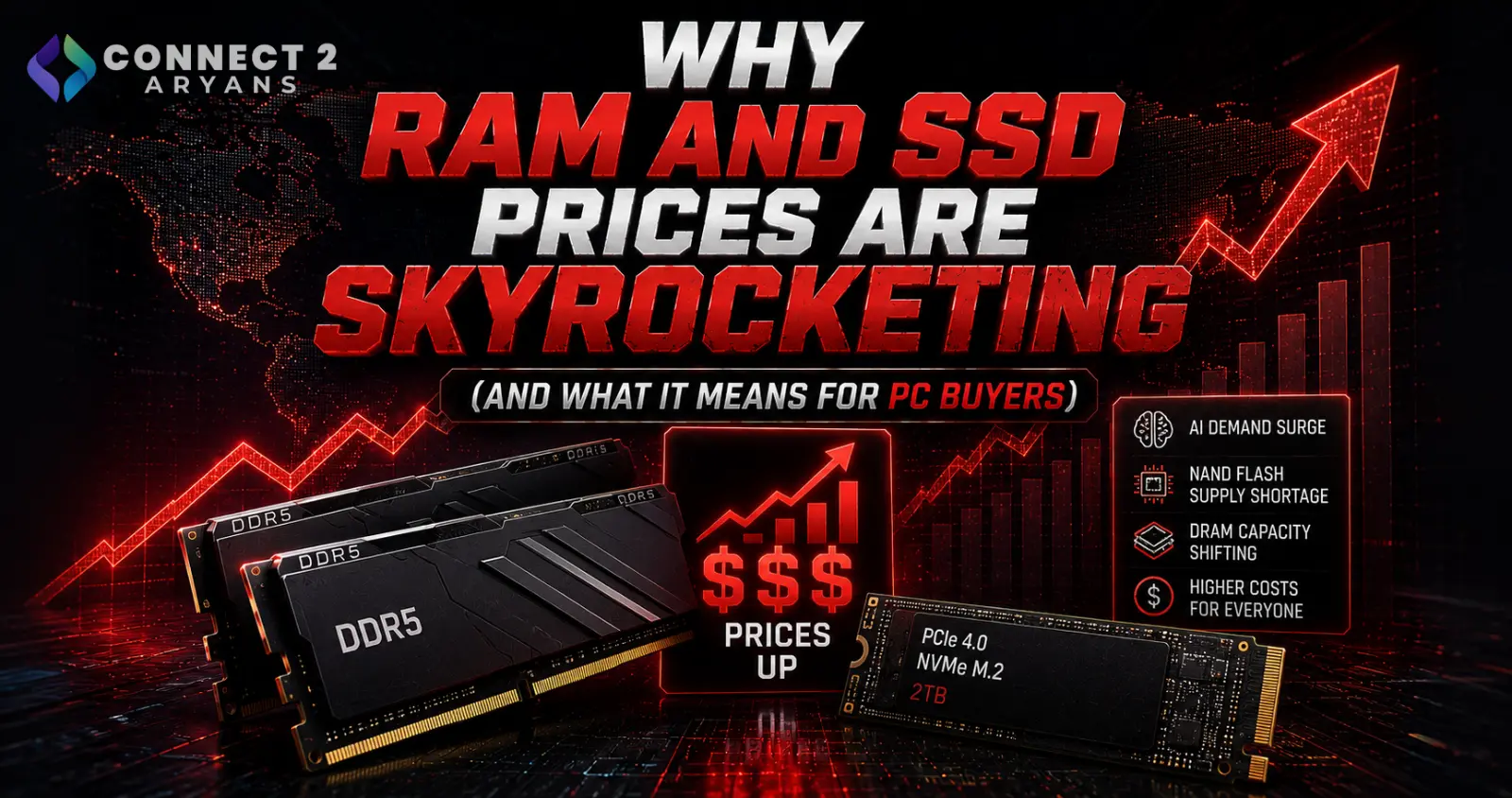
If you've shopped for RAM or an SSD recently and been surprised by the price, you're not imagining it. Memory prices have climbed dramatically through 2026, and this isn't a normal seasonal fluctuation — it's a genuine supply crunch with a clear, identifiable cause. Here's what's actually happening, and what it means if you're buying or building right now.
What's Actually Happening
Global memory manufacturers — the handful of companies that produce nearly all the world's DRAM and NAND flash — have been redirecting an enormous share of their production capacity away from consumer memory (the RAM and SSDs that go into everyday PCs) and toward a different, far more profitable product: High Bandwidth Memory used in AI data center hardware.
This isn't a small shift. AI accelerator demand for memory has grown so sharply that manufacturers can earn dramatically higher margins supplying data centers than they can selling standard consumer DDR4, DDR5, or NAND flash. Rather than expanding total production to serve both markets, they've simply prioritized the more profitable one — which means less consumer-grade memory is being made, even as demand for PCs, laptops, and phones hasn't gone away.
How Much Have Prices Actually Risen?
- Consumer DRAM pricing has climbed sharply across nearly every category through the first half of 2026, with some memory types seeing price increases well beyond what would normally be considered a steep jump in a single quarter
- NAND flash (the storage behind SSDs) has followed a similar pattern, with contract pricing rising substantially quarter over quarter
- Even older DDR4 memory, which would normally be getting cheaper as it ages out of mainstream use, has seen significant price increases — a reversal of the usual trend for aging memory technology
- Industry analysts have projected combined DRAM and SSD pricing could rise well over 100% across 2026 compared to the prior year if current trends continue
Why This Is Different From a Normal Price Cycle
Memory pricing has always been cyclical — prices rise and fall as manufacturers adjust production. What makes the current situation different is the underlying cause: this isn't a temporary supply hiccup that resolves once a new factory comes online in a few months. It's a structural shift in how manufacturers are allocating their existing capacity, driven by a demand source (AI infrastructure) that shows no sign of slowing down.
New manufacturing capacity specifically built to ease consumer memory supply isn't expected to come fully online for a couple of years, meaning the pricing pressure is likely to persist well beyond a typical short-term shortage.
What This Means If You're Building a PC Right Now
- RAM and storage now make up a much larger share of total build cost than they did previously — budget accordingly, since these components can no longer be treated as a small, predictable line item
- DDR4 platforms may actually be a smart choice for budget builds right now, since older-generation memory, while also affected by price increases, generally remains cheaper in absolute terms than current-generation DDR5 for buyers who don't specifically need the newer platform
- Buy only the capacity you genuinely need rather than over-buying "for the future," since paying inflated prices for capacity you won't use for years doesn't make sense at current pricing
- Watch for counterfeit or mislabeled memory, since scarce, high-demand components historically attract more counterfeit activity — buy from reputable, established sellers rather than unusually cheap listings
Is It Worth Waiting to Buy?
This is genuinely difficult to answer with certainty, since it depends on your specific timeline and needs:
- If you need a PC now for work, school, or a specific deadline, waiting isn't realistic — buy based on current pricing and prioritize getting adequate (not excessive) RAM and storage
- If your purchase is flexible and you can wait, it's worth knowing that most analysts don't expect meaningful relief until new manufacturing capacity comes online, which isn't expected for a couple of years — "waiting a few months" is unlikely to meaningfully help given the structural nature of the shortage
- If you're upgrading rather than building fresh, prioritize whichever single upgrade (RAM or storage) addresses your most pressing bottleneck, rather than trying to max out both simultaneously at current prices
What About GPU and Pre-Built PC Prices?
- Graphics cards using GDDR memory are also affected by the broader memory supply pressure, which has contributed to tighter GPU availability and pricing pressure across the market
- Pre-built PC prices have risen in step with component costs, since RAM and storage are standard inclusions in every build
Our Recommendation Right Now
- Buy RAM and storage sized to your actual current needs, not speculative future capacity
- Consider DDR4 platforms for budget-conscious builds where the platform still meets your performance needs, since it generally remains more cost-effective than DDR5 at current pricing
- Buy from established, reputable sellers to avoid counterfeit risk during a high-demand period
- Don't delay a genuinely needed purchase expecting a quick price correction — this shortage is structural, not seasonal
Final Thoughts
The current RAM and SSD price surge is driven by a real, structural shift in global memory manufacturing priorities toward AI infrastructure, not a temporary blip. If you need to buy now, focus on getting the capacity you actually need rather than over-provisioning, and don't expect a quick return to previous pricing — most industry analysis points toward this pressure continuing well into the next couple of years.
Browse our full range of Memory RAM and NVMe SSDs on Connect2Aryans, and reach out to our team if you'd like help sizing your build appropriately for current market conditions, with warranty support included.