
Valve's Steam Machine Is Official — Price, Specs, and Is It Worth It?
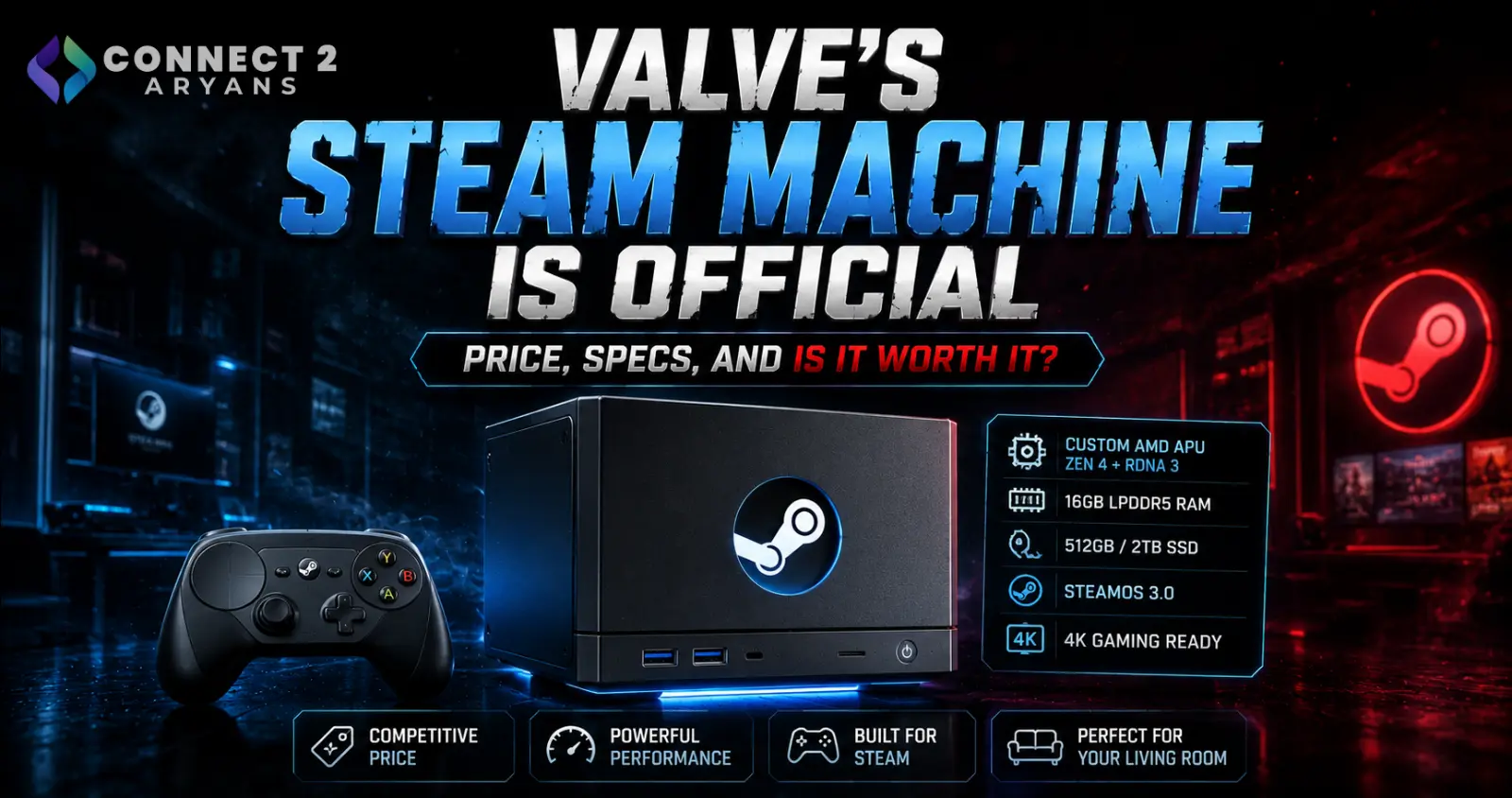
More than a decade after the original 2015 Steam Machine concept quietly faded away, Valve's second attempt is finally real, priced, and shipping. Here's exactly what the Valve Steam Machine actually offers, what it costs, and who it makes sense for.
What the Steam Machine Actually Is
The Steam Machine is a compact, roughly 6-inch cube designed to bring your Steam library to the TV, while also working as a small desktop PC when you want it to. It runs SteamOS — the same Linux-based operating system that powers the Steam Deck — meaning the entire experience is built around controller navigation from the moment you power it on.
Valve is careful not to call it a console. The company positions it as an extension of PC gaming rather than a closed platform: it's fully upgradeable (RAM and SSD), works with any USB or Bluetooth peripheral out of the box, and isn't locked to a single storefront the way a traditional console is.
Pricing
The Steam Machine launched in four configurations:
- 512GB, base model: $1,049
- 512GB with Steam Controller bundle: $1,128
- 2TB model: $1,349
- 2TB with Steam Controller and extra faceplates (red fabric and solid walnut): $1,428
All prices include VAT where applicable. For context, the original 2015 Steam Machine concept started at $449 — Valve has been direct that this pricing is higher than the company originally wanted to charge.
Specs
- CPU: Semi-custom AMD Zen 4, 6 cores / 12 threads
- GPU: Semi-custom RDNA 3 design, 28 compute units, 2.45GHz max sustained clock, 8GB of dedicated GDDR6 memory
- System memory: 16GB DDR5
- Storage: 512GB or 2TB, user-upgradeable
- Display outputs: DisplayPort 1.4 (up to 4K at 240Hz) and HDMI 2.0 (up to 4K at 120Hz)
- Connectivity: Wi-Fi 6E (2x2), Bluetooth 5.3, Gigabit Ethernet
- Ports: One USB-C, four USB-A
- Power: Internal power supply, 110-240V AC — no external power brick
Valve markets the Steam Machine as roughly six times more graphically powerful than the Steam Deck.
Real-World Performance Expectations
- Valve's target is 4K gaming at 60 frames per second, but this relies heavily on FSR upscaling rather than native rendering — hitting that target generally means running with ray tracing disabled
- Valve has notably softened its own product page language over time, moving from a flatter "4K 60" promise to more cautious, qualified performance framing — worth keeping in mind when setting expectations
Why the Price Is Higher Than Originally Planned
Valve has been unusually direct about this: the company has publicly attributed the pricing to sharp increases in RAM and storage component costs during development, alongside broader supply difficulties that also reduced launch inventory. Rather than subsidizing the hardware below cost or relying on exclusive software to make up the difference — a path Valve says would work against its open PC gaming philosophy — the company chose to price the device to reflect its actual current component costs.
This mirrors the same memory shortage dynamics currently affecting RAM, SSD, and GPU pricing across the entire PC market.
How the Reservation System Works
- Valve is using a randomized reservation queue rather than a traditional first-come, first-served preorder, specifically designed to reduce scalping
- Selected buyers receive a purchase email and have 72 hours to complete their purchase before the reservation is canceled and passed to the next person in queue
- Valve has said it expects to continue sending purchase invitations throughout the rest of the year, meaning actual availability depends heavily on queue position and patience
Is It Worth It?
Where the Steam Machine makes sense:
- You want a living-room, TV-connected PC gaming experience without building or maintaining a full desktop
- You value SteamOS's console-like simplicity — instant suspend/resume, controller-first navigation, HDMI-CEC support — over maximum raw performance
- You're comfortable primarily gaming at 1440p or using FSR upscaling to hit 4K targets, rather than expecting native 4K performance
Where a traditional gaming PC or pre-built might make more sense:
- You want maximum performance per dollar, since a similarly priced dedicated gaming PC build can generally offer stronger raw GPU performance
- You want full flexibility across every major game launcher and platform without SteamOS-specific considerations
- You're not planning to primarily use it in a living-room, TV-connected setup
Final Thoughts
The Steam Machine is a genuinely interesting, well-specified device — but it launches into a market where component costs have pushed its price well above what Valve originally intended, and its real-world 4K performance leans heavily on upscaling rather than native rendering. It's a strong option specifically for buyers who want a console-like, living-room PC gaming experience built around SteamOS — less clearly the best value if raw performance per dollar is your main priority.
Browse our full range of Gaming Consoles including the Valve Steam Machine on Connect2Aryans, with warranty support included.