
RTX 50 Super Series Delayed — What It Means If You're Buying a GPU Right Now
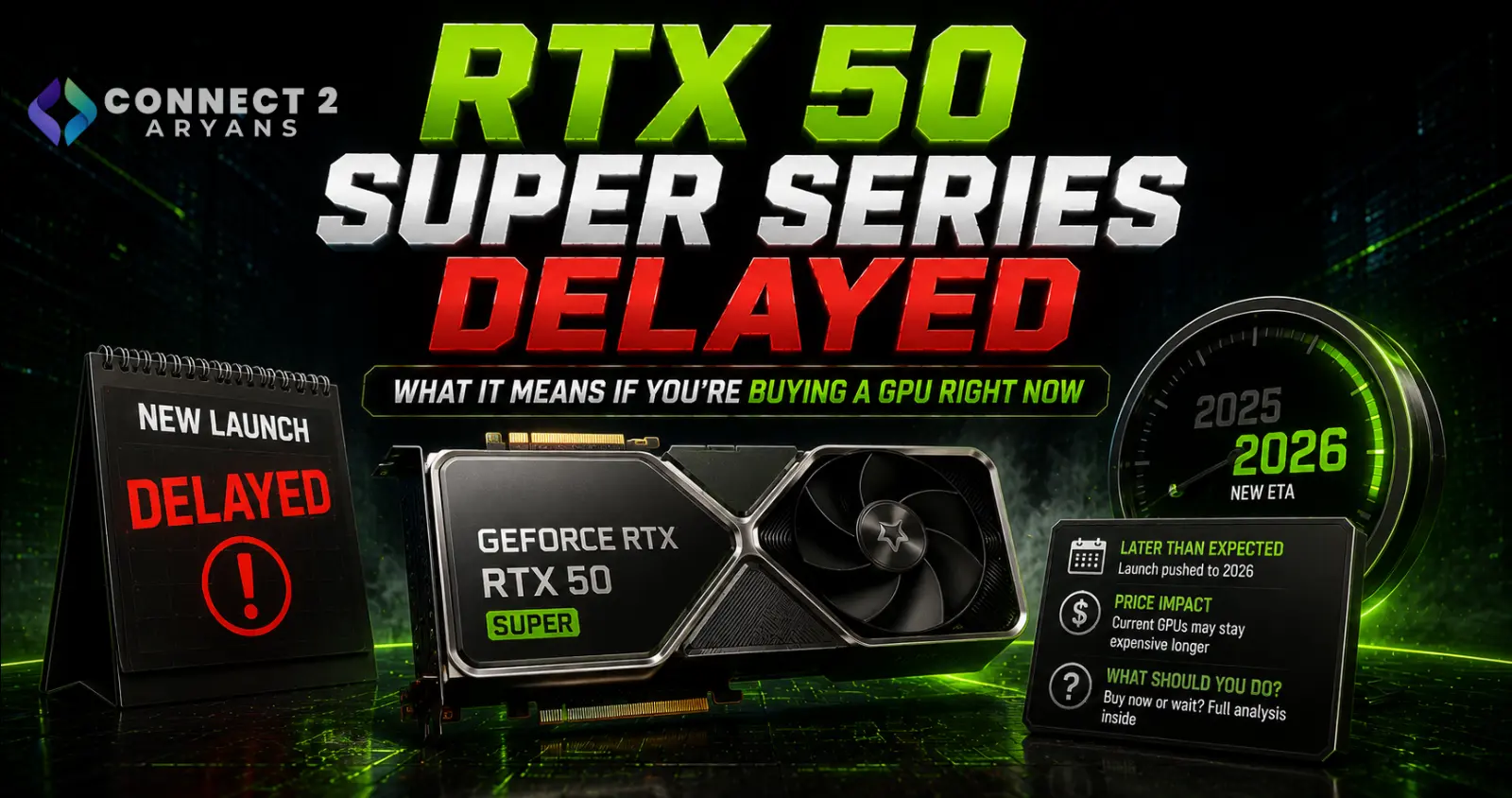
NVIDIA's rumored RTX 50 Super refresh — expected to bring higher VRAM capacities to the RTX 50 lineup — has reportedly stalled just before launch, with finished hardware already sitting at board partners but no confirmed release date. Here's what's actually going on, and what it means if you're shopping for a GPU right now.
What's Reportedly Happening
According to multiple industry sources, NVIDIA's RTX 50 Super lineup — expected to include Super variants of the RTX 5050, 5070, 5070 Ti, and 5080 — has physically reached at least one board partner in finished form. In other words, the hardware itself appears to be done. What's missing is a launch date, and the reported reason comes down to memory pricing rather than any design or manufacturing issue with the cards themselves.
The Core Problem: 3GB GDDR7 Chip Pricing
- The Super refresh was expected to increase VRAM capacity on several models by using newer, higher-density 3GB GDDR7 memory chips instead of the 2GB chips used in current RTX 50 cards
- This approach lets NVIDIA boost memory capacity without redesigning the circuit board or widening the memory bus — simply swapping in higher-capacity chips
- The catch: these 3GB chips reportedly cost roughly three times as much as the 2GB chips currently in use, despite only offering 50% more capacity per chip
- Multiplied across the six to eight memory chips a modern GPU typically uses, this pricing difference adds a substantial amount to the cost of building each card
Why This Matters for Pricing
- If NVIDIA absorbed the full cost increase, Super variants could end up priced uncomfortably close to the tier above them — for example, a higher-VRAM RTX 5070 Super risks overlapping too closely with the RTX 5070 Ti's pricing and performance position
- This kind of pricing overlap would make the Super refresh a harder sell against NVIDIA's own existing lineup, not just against AMD's competing cards
- Reports suggest NVIDIA and its partners have been unable to agree on final consumer pricing that avoids this overlap, which is reportedly the direct cause of the hold
The Bigger Picture: This Is Part of the Broader Memory Shortage
This delay doesn't exist in isolation — it's a direct consequence of the same global memory supply crunch currently pushing up RAM and SSD prices across the entire PC market. GDDR7 memory competes for the same manufacturing capacity being redirected toward AI-focused memory products, and NVIDIA is far from the only company affected by it.
What This Means If You're Buying a GPU Right Now
- Don't wait indefinitely for the Super refresh if you need a GPU now — there's no confirmed launch date, and reports suggest the hold could persist as long as GDDR7 pricing remains elevated
- Current RTX 50 series cards (non-Super) remain fully available and are not going anywhere — buying one now doesn't mean missing out on a confirmed near-term replacement, since the Super series' arrival is genuinely uncertain
- If the Super series does launch, expect pricing to reflect the higher memory cost — don't assume it will land at the same price points as originally rumored before this delay
- Consider your actual VRAM needs today rather than waiting for higher-capacity models that may not arrive soon — browse our Graphics Card range for current options with 12 GB VRAM or higher already available in several current-generation cards
What About AMD in the Meantime?
With NVIDIA's refresh on hold, AMD's current RDNA 4 lineup — including the recently globally-launched RX 9070 GRE — remains a strong option worth comparing directly against current-generation NVIDIA cards rather than waiting for uncertain new arrivals.
Final Thoughts
The RTX 50 Super delay is a direct symptom of the broader 2026 memory supply crunch, not a design or manufacturing problem with the cards themselves. If you need a GPU now, current-generation cards remain the practical choice — there's no confirmed timeline for the Super series, and given the pricing pressure driving the delay, any eventual launch may not deliver the value originally expected.
Browse our full range of Graphics Card options from NVIDIA and AMD on Connect2Aryans, with warranty support included.