
Choosing the Right Intel Graphics Card
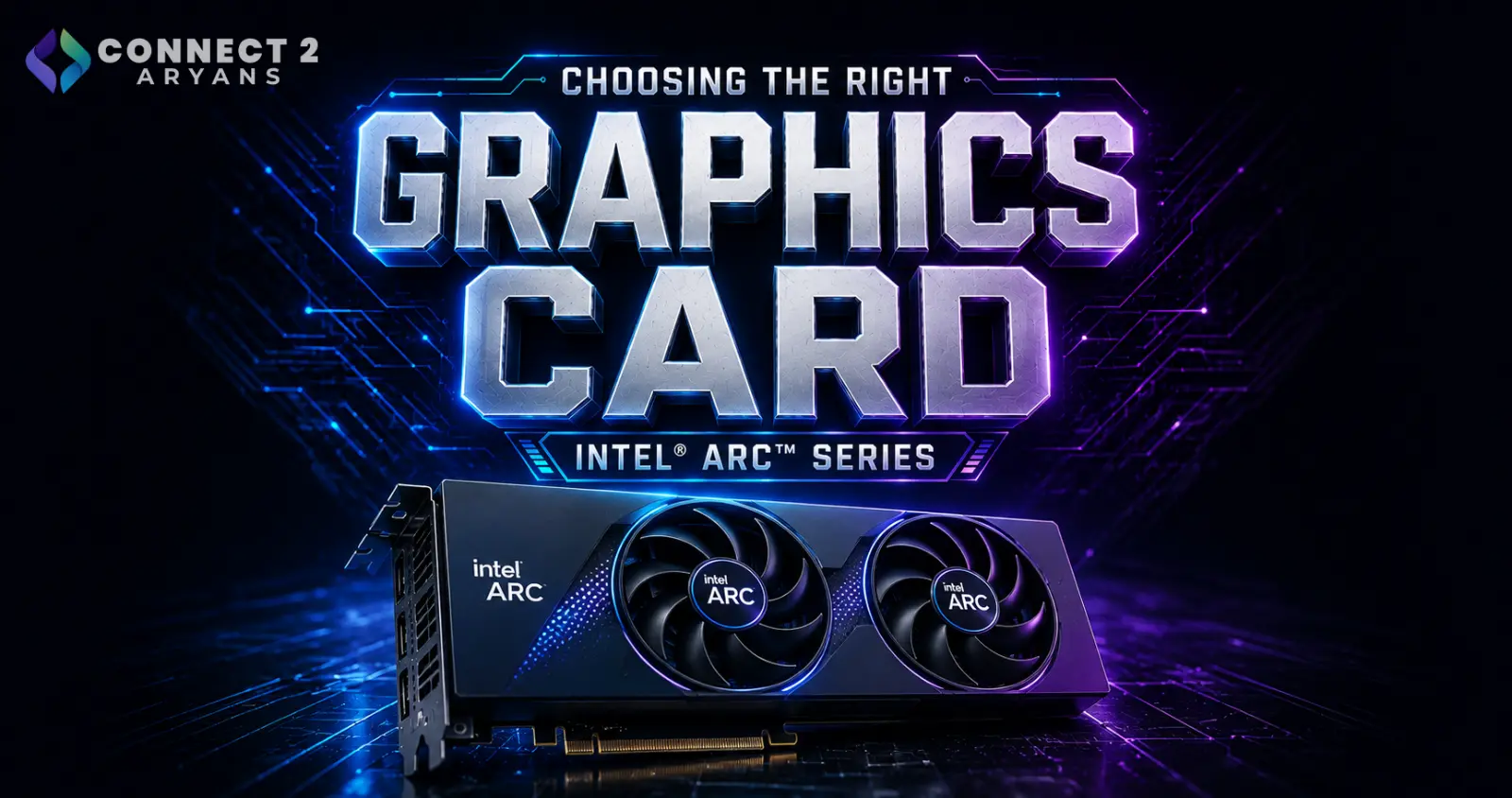
Intel is the newest serious player in discrete graphics, and its Arc lineup has genuinely earned attention in one specific place: budget-tier value. It's worth being upfront, though — Intel doesn't currently compete at the mid-range or high-end gaming tier the way NVIDIA and AMD do. Here's an honest breakdown of where Intel Arc actually fits.
Where Intel Arc Actually Shines: Budget Value
Intel's current gaming lineup consists of two cards, both aimed squarely at budget-conscious 1080p and 1440p gamers:
- Intel Arc B580 — 12 GB VRAM, a genuinely strong 1440p budget option, often outperforming similarly priced competitors thanks to its generous VRAM
- Intel Arc B570 — 10 GB VRAM, a step down in price and performance, still solid for 1080p and light 1440p gaming
RAM needed: 16GB is the practical minimum to pair with either card; 32GB gives more headroom for multitasking alongside gaming.
PSU Wattage: 500 - 550 Watts is typically sufficient for either card.
Why the VRAM Advantage Matters
Both Arc cards offer more VRAM than similarly priced NVIDIA and AMD entry-level cards, which matters more than it might seem:
- More VRAM at the budget tier means fewer texture quality compromises and better longevity as games grow more demanding
- This is Intel's clearest competitive edge right now — it's genuinely difficult to find this much VRAM at this price point from the other two brands
Where Intel Arc Currently Falls Short
To set realistic expectations:
- No mid-range or flagship gaming card exists yet. Intel's rumored higher-tier "Big Battlemage" gaming GPU was shelved in favor of a workstation/AI-focused card instead, so there's currently no Intel option above the B580 for gamers
- Driver maturity varies by game. Performance and stability are strong in popular, actively supported titles, but older or niche games can be hit-or-miss compared to NVIDIA and AMD's more mature drivers
- Ray tracing and upscaling (XeSS) are improving but not yet matching NVIDIA's DLSS 4 in game support breadth
Arc Pro: Intel's Workstation and AI Line
Separate from the gaming-focused B-series, Intel also offers Arc Pro cards aimed at professional and AI workloads rather than gaming:
- Built around large VRAM capacities (up to 32GB) for AI, content creation, and professional software workloads
- Not the right choice for a gaming build — if you're building for gaming, stick with the B580 or B570
Who Should Actually Consider Intel Arc
- Budget-focused 1080p/1440p gamers who want more VRAM than competing cards at the same price
- Buyers who mostly play popular, well-supported titles, where Intel's driver support is strongest
- Not the right choice for buyers needing mid-range, high-end, or flagship gaming performance, or for older/niche game libraries where driver support is less consistent
Common Mistakes to Avoid
- Expecting Intel Arc to compete at the mid-range or high-end gaming tier — it currently doesn't
- Assuming driver support is uniformly strong across all games — check for your specific titles first
- Buying an Arc Pro card for a gaming build — those are built for professional and AI workloads, not gaming performance
- Overlooking the genuine VRAM advantage Intel offers at the budget tier, which is its strongest selling point right now
Final Thoughts
Intel Arc isn't trying to compete across the whole GPU market yet — it's carved out a genuinely strong niche in budget-tier value, backed by more VRAM than competitors at the same price. If you're buying budget and play mostly popular titles, it's worth serious consideration. For anything above budget-tier gaming, NVIDIA or AMD remain the more complete options for now.
Browse our full range of Intel Arc graphics cards on Connect2Aryans, built for value-focused 1080p and 1440p gaming, with warranty support included.