
Choosing the Right Driving Simulation Gear
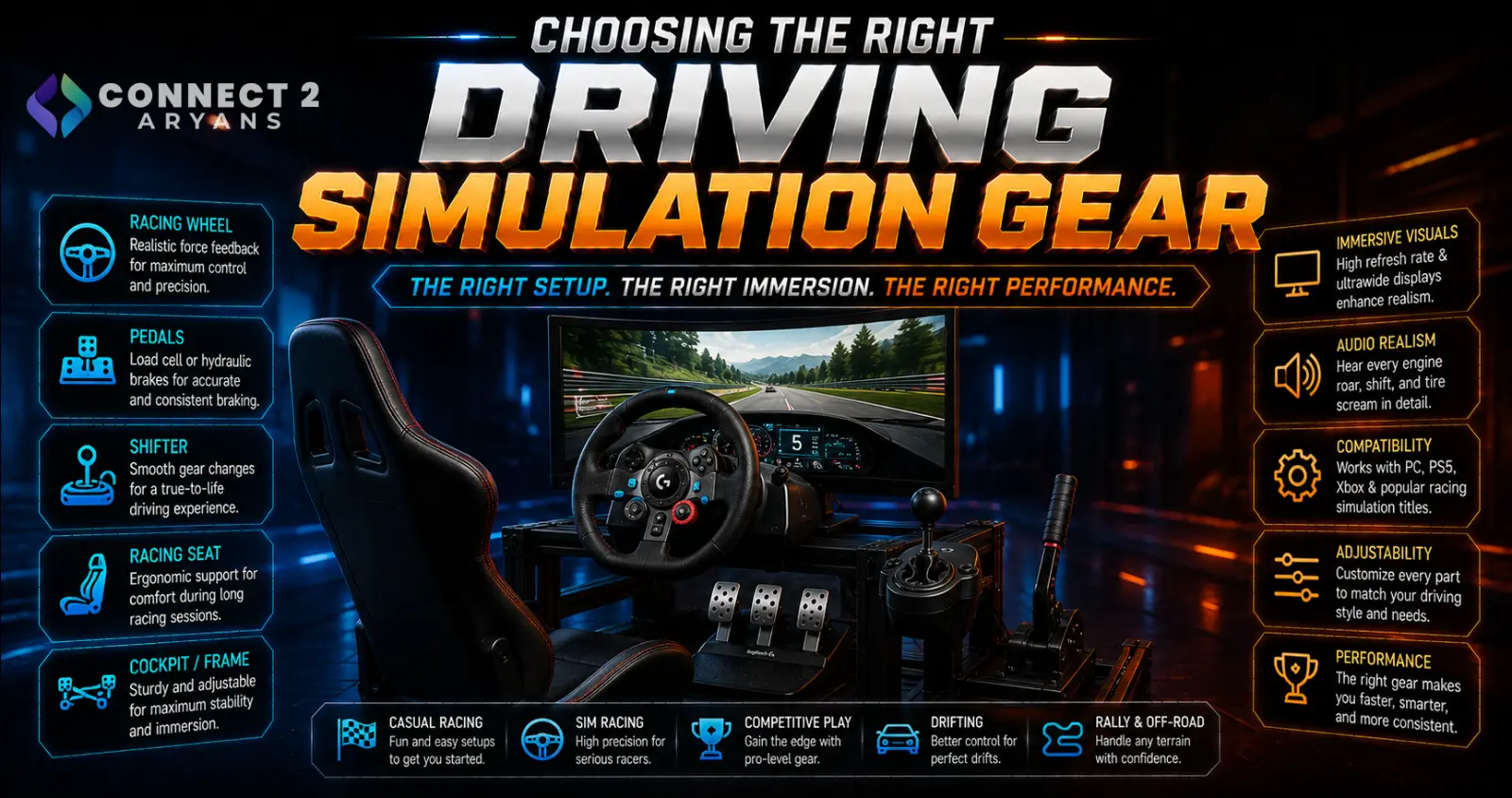
Racing wheels and pedal sets vary enormously in quality — from budget entry-level bundles to direct-drive setups costing as much as a mid-range gaming PC. The force feedback motor and pedal sensors matter far more to the actual driving feel than the sticker or paddle shifter design. Here's how to choose the right Driving Simulation Gear for your budget and platform.
Step 1: Understand Force Feedback Motor Types
This is the single biggest factor separating budget and high-end racing wheels:
- Gear-driven — the most common entry-level type, using gears to translate motor movement to wheel resistance; functional but can feel slightly grainy or noisy compared to higher-tier options
- Belt-driven — a step up from gear-driven, offering smoother, quieter force feedback through a belt system rather than direct gear contact
- Direct drive — the motor connects directly to the wheel shaft with no gears or belts in between, delivering the most precise, powerful, and realistic force feedback available, at a significantly higher price point
Rule of thumb: belt-driven wheels offer the best value for most enthusiasts stepping up from a gamepad. Direct drive is worth it specifically for serious sim racers who want the most realistic feel and plan to stick with the hobby long-term.
Step 2: Pedal Sensor Type
- Potentiometer-based pedals — common on entry-level and mid-range sets, measuring pedal position via a potentiometer; functional but can wear out or become less precise over time
- Load cell pedals (especially on the brake) — measure actual force/pressure applied rather than just pedal travel, offering significantly more realistic and consistent braking feel, closer to how a real car's brake responds
Recommendation: if you upgrade only one component from an entry-level bundle, a load cell brake pedal often improves realism more than any other single upgrade.
Step 3: Shifter Type
- H-pattern shifters — replicate a manual transmission's gear pattern, popular for rally and classic car simulation where manual shifting is part of the experience
- Sequential shifters — simpler up/down shifting, common in motorsport-style racing and often paired with paddle shifters on the wheel itself
- Paddle shifters (built into the wheel) — the most common setup for modern racing sim titles, offering quick, simple gear changes without a separate shifter unit
Choose based on which racing games and disciplines you actually play — sim racing enthusiasts focused on classic/rally content often want a separate H-pattern shifter, while modern GT/F1-style racing is well served by paddle shifters alone.
Step 4: Mounting — Clamp, Desk, or Rig
- Desk clamp mounting — the most accessible option, clamping the wheel base to an existing desk; workable for casual use, though desks can flex under strong force feedback, reducing the realism of higher-end wheels
- Dedicated racing rig/cockpit — a purpose-built frame that mounts the wheel, pedals, and seat rigidly together, essential for getting the full benefit of a higher-end direct drive wheel's force feedback
- If you're investing in a strong direct drive wheel, pairing it with only a desk clamp often leaves performance on the table — the desk itself becomes the limiting factor
Step 5: Platform Compatibility
- Confirm the wheel/pedal set is compatible with your actual platform — PC, PlayStation, and Xbox each have different compatibility requirements, and not every wheel works across all three
- Some wheels require specific licensing or drivers for console compatibility, which affects both price and available options
- If you play on both PC and console, check for wheels explicitly supporting cross-platform compatibility rather than assuming a PC wheel works on console or vice versa
Step 6: Wheel Rim Size and Interchangeability
- Entry-level and mid-range wheels typically come with a fixed wheel rim
- Higher-end direct drive systems often support interchangeable wheel rims (GT-style, formula-style, rally-style), letting you swap rims to match different racing disciplines as your setup grows
- This matters mainly for enthusiasts planning to expand their setup over time rather than casual or first-time buyers
Popular Sim Racing Brands
Common Mistakes to Avoid
- Investing in a high-end direct drive wheel while mounting it only on a desk clamp, limiting its actual performance
- Buying a wheel without confirming platform compatibility with your specific console or PC setup
- Overlooking pedal sensor type, missing one of the most impactful realism upgrades available
- Choosing a shifter type that doesn't match the racing games and disciplines you actually play
Final Thoughts
The right driving simulation gear comes down to matching force feedback motor type and pedal sensor quality to your budget and how seriously you're taking sim racing, then confirming platform compatibility and proper mounting to actually realize that hardware's potential. A strong wheel poorly mounted on a flexing desk won't deliver the experience its specs promise.
Browse our full range of driving simulation gear from HORI, Logitech, Next Level Racing, Playseat and PXN on Connect2Aryans, with warranty support included.